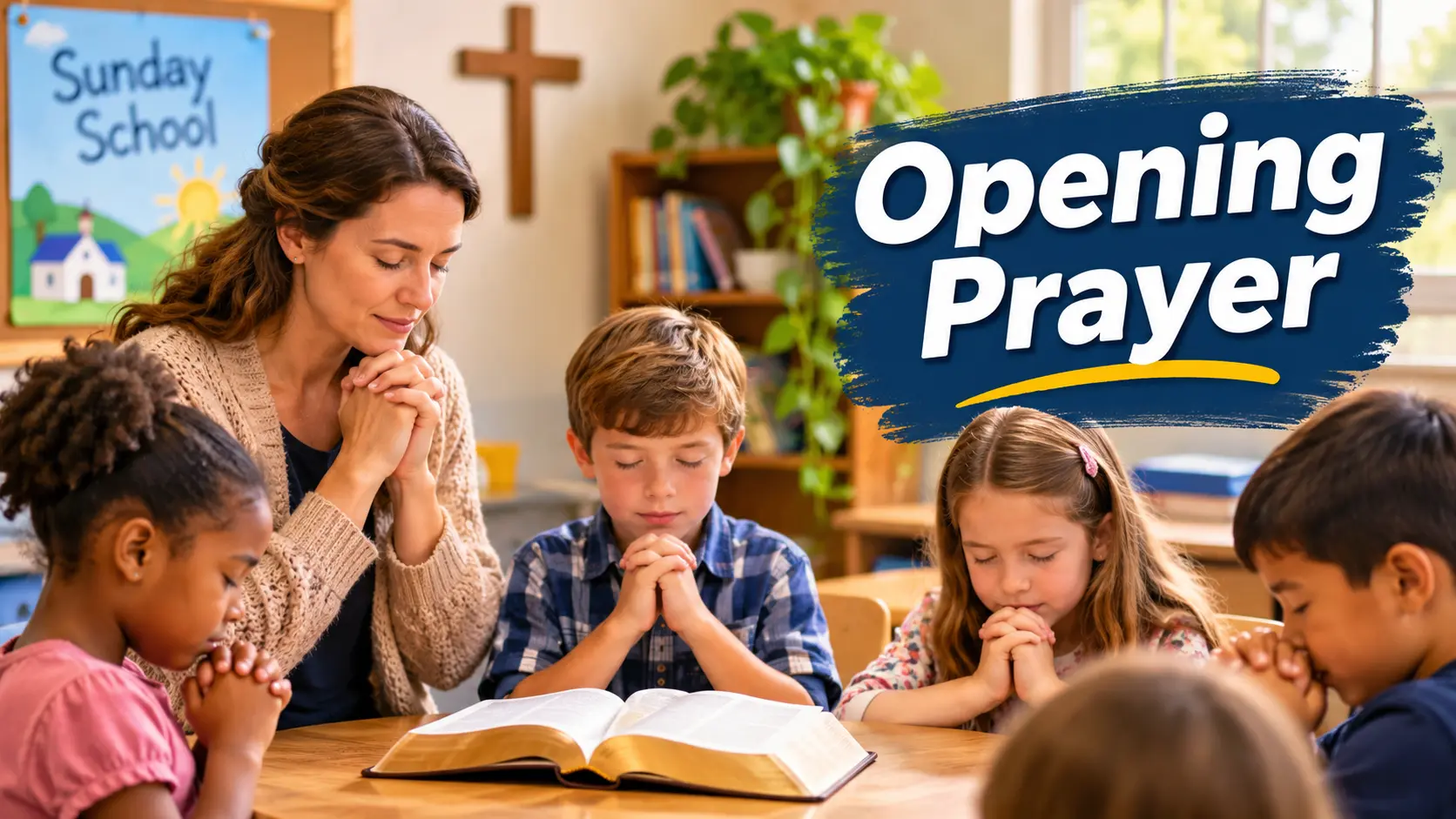
The words do not need to be complicated or lengthy. A meaningful prayer should reflect the children's ages, the purpose of the lesson and the importance of learning God's Word together.
Sunday School Opening Prayer
Heavenly Father,
Thank You for bringing us together for Sunday school today. We are grateful for this opportunity to open the Bible and learn more about Your Word.
As our lesson begins, help us set aside unnecessary distractions and give our attention to what we are about to study. Open our minds to understand the Scriptures and prepare our hearts to receive their teaching.
Lord, we know that each person has arrived here with different thoughts and experiences. Some children may be excited about today's lesson, while others may be tired, worried or uncertain about something happening in their lives.
Help us remember that everyone deserves patience and understanding. Teach us to listen respectfully, speak truthfully and treat our classmates with care.
We pray especially for our teachers, who have prepared to share Your Word with us. Give them wisdom to explain the Scriptures clearly, patience when questions arise and discernment to recognize when someone needs additional help.
As we hear today's Bible lesson, help us consider its meaning carefully. May we learn not only what the passage says but also how its teaching should influence our choices.
When we leave this classroom, remind us of the things we have learned. Help us demonstrate honesty in our words, compassion toward others and a willingness to do what is right.
We place this time of learning before You and ask for Your guidance throughout our lesson.
In Jesus' name, Amen.
Short Opening Prayer for Younger Children
Young children often respond best to prayers that use familiar words and express ideas they can easily understand. A short prayer allows them to participate without becoming confused by lengthy sentences or unfamiliar expressions.
Teachers may read this prayer slowly and invite children to join in the closing Amen. The words can also be repeated occasionally as children become more comfortable praying together.
Dear God,
Thank You for bringing us to Sunday school today. Thank You for our teachers, our friends and the Bible stories we are going to learn.
Please help us listen carefully and understand what Your Word teaches. Help us remember the things we learn when we go home.
Teach us to be kind to our friends and respectful toward our teachers. When someone needs help, remind us to show care.
Thank You for hearing our prayers and allowing us to learn about You.
In Jesus' name, Amen.
Opening Prayer Led by a Child
Inviting an older child to lead the opening prayer can encourage thoughtful participation in Sunday school. It gives students an opportunity to express their faith while learning that prayer does not require complicated language or perfect delivery.
Children should be invited rather than pressured to speak publicly. A teacher may provide the following prayer in advance so that a willing student can read it comfortably.
Dear Lord Jesus,
Thank You for another Sunday and for the chance to learn from the Bible. We are grateful that we can gather with our teachers and friends.
As our lesson begins, please help us understand what we hear. Give us the courage to ask questions when something is difficult and the patience to listen when others are speaking.
Help us remember that learning Your Word is important. May we take today's lesson seriously without forgetting to treat one another with kindness.
Bless everyone who has helped prepare our class. Thank You for the time our teachers have given to helping us understand the Scriptures.
Guide us throughout this lesson and help us remember its message during the coming week.
In Your name, Amen.
A child who wishes to pray in personal words should also be encouraged to do so. The teacher's responsibility is to provide support and help students understand that sincere prayer matters more than speaking without hesitation.
A Teacher's Prayer Before Sunday School
Preparing to teach Scripture involves more than organizing lesson materials and selecting classroom activities. Sunday school teachers must consider how to explain biblical passages accurately while responding thoughtfully to children with different ages, abilities and questions.
James 1:5 encourages believers who lack wisdom to ask God for it. Although the verse addresses wisdom in the wider context of Christian trials and faithful living, its teaching offers a meaningful reason for teachers to seek God's guidance.
The following prayer is intended for a teacher to offer privately before the children arrive. It focuses on faithful teaching, humility and the responsibility of caring for those entrusted to the class.
Heavenly Father,
As I prepare to teach Your Word today, I ask for wisdom and understanding. Help me approach the Scriptures with humility and a sincere desire to communicate their meaning faithfully.
Guide me as I explain the lesson. Give me clarity when presenting difficult ideas and patience when children need additional time to understand.
Lord, help me recognize the responsibility that comes with teaching children about You. Keep me from speaking carelessly or giving uncertain answers simply because I feel expected to know everything.
When a child asks a difficult question, give me honesty and discernment. Help me acknowledge what I do not know and remain willing to study further.
Teach me to notice the needs of the children before me. May I offer encouragement to those who are hesitant and patient instruction to those who struggle.
Keep my attention on the purpose of this lesson rather than merely completing the activities I have prepared.
May my words remain faithful to Your truth and may my conduct reflect the care and integrity I hope these children will learn.
I commit today's Sunday school lesson to You.
Through Jesus Christ, Amen.
Prayerful preparation should be accompanied by careful study of the biblical passage being taught. Seeking God's wisdom does not remove the teacher's responsibility to examine the context, prepare accurate explanations and acknowledge questions that require further consideration.
Jesus' Teaching on Welcoming Children
Matthew 19:13–15 records an occasion when people brought little children to Jesus so that He might lay His hands on them and pray. The disciples rebuked those bringing the children but Jesus corrected their response.
In Matthew 19:14, Jesus said:
"Suffer little children and forbid them not, to come unto me: for of such is the kingdom of heaven." — Matthew 19:14, KJV
The word suffer in this passage means to allow or permit. Jesus was instructing His disciples not to prevent the children from approaching Him and His response demonstrated that they were not to be turned away.
The passage is not specifically about Sunday school or classroom instruction. Its immediate setting concerns Jesus receiving children and speaking about the kingdom of heaven but it also provides a meaningful example of how children should be welcomed.
For a Sunday school teacher, this biblical account encourages a thoughtful attitude toward every child in the classroom. Children who ask repeated questions, struggle to follow instructions or need extra encouragement should still be treated with patience and dignity.
An opening prayer may express these intentions but the teacher's conduct throughout the lesson should reflect them. Children are more likely to understand the meaning of welcome when they experience it through consistent actions.
Seeking Understanding Through Psalm 119
Psalm 119:18 offers a meaningful Scripture for Sunday school teachers who wish to begin a Bible lesson with prayer. Rather than asking merely to hear God's instructions, the psalmist expresses a desire to understand the wonderful things contained in them.
The verse reads:
"Open thou mine eyes, that I may behold wondrous things out of thy law." — Psalm 119:18, KJV
This request belongs to a psalm that repeatedly expresses love for God's Word and a desire to understand and obey His instructions. The language of opened eyes points toward spiritual understanding rather than physical sight.
For Sunday school, the verse provides a thoughtful foundation for asking God to help teachers and children understand Scripture. It reminds the class that biblical learning involves more than hearing familiar stories or remembering important names.
A teacher might explain the verse by asking children to think about something they initially found difficult to understand. Just as learning often requires patient explanation and attention, studying the Bible calls for careful listening and a willingness to consider its meaning.
The teacher should avoid suggesting that prayer guarantees an immediate answer to every biblical question. Scripture may require continued study, thoughtful discussion and guidance from those with greater knowledge.
Psalm 119:18 can also be used as a brief prayer before a lesson begins. Teachers may read the verse aloud and invite the class to consider its meaning before offering an original prayer for understanding.
Preparing Children for Opening Prayer
A Sunday school class may be lively before the lesson begins, especially when children have been greeting friends or participating in other activities. A calm transition into prayer can help everyone recognize that the class is moving toward a time of Bible study.
Teachers can invite children to finish their conversations, put away unnecessary materials and prepare to participate. Explaining what the class will pray about may be more helpful than simply asking everyone to become silent.
For younger children, a teacher might say, "We are going to thank God for bringing us together and ask Him to help us understand today's Bible lesson." This gives children a clear explanation of the prayer's purpose without introducing complicated ideas.
Children should also understand that prayer is not a performance in which they are expected to demonstrate perfect concentration. Some may struggle to remain still because of their age, individual learning needs or other circumstances.
Teachers can encourage respectful participation while responding patiently to children who need additional support. The purpose is to help children approach prayer sincerely, not to create an atmosphere where they become afraid of making mistakes.
Connecting Prayer With the Bible Lesson
An opening prayer can prepare children for the particular Scripture they are about to study. Rather than using unrelated requests every week, teachers may include a simple prayer intention that reflects the central message of the biblical passage.
For example, a lesson about the Good Samaritan in Luke 10:25–37 may begin with a prayer asking God to help the children understand what it means to show mercy to others. This reflects a central concern of the parable without reducing its teaching to a vague reminder about being nice.
A lesson about Jesus welcoming children in Matthew 19:13–15 may begin with a request for understanding about the way Jesus received them. The teacher could ask God to help the class recognize the importance of treating others with consideration and respect.
These connections should arise from the actual meaning of Scripture rather than from a predetermined classroom theme. Before preparing the prayer, teachers should consider the passage's context and identify what it genuinely communicates.
Older children may also be invited to suggest a suitable prayer request related to the lesson. Their suggestions can reveal what they have understood and help the teacher recognize where further explanation may be needed.
An opening prayer should not become a substitute for teaching the Bible. Its purpose is to prepare the class to study attentively and respond thoughtfully to what Scripture teaches.
Keeping Sunday School Prayer Meaningful
A Sunday school opening prayer gives teachers and children a shared beginning before they study Scripture. The words should be understandable, appropriate for the class and connected to the purpose of learning God's Word.
Younger children may benefit from familiar language, while older students may appreciate opportunities to participate more actively. Neither elaborate wording nor a lengthy prayer is necessary for the moment to be meaningful.
The responsibility expressed in prayer continues throughout the lesson. When teachers explain Scripture faithfully, respond patiently to questions and treat children with care, their actions reflect the wisdom and understanding they have asked God to provide.
Sunday school prayer serves a particular purpose within the wider experience of Christian worship. Readers seeking prayers for personal devotion, family life or preparing for church may also explore our Sunday morning and evening prayers.